Home / Articles
Deep Plane Facelift: Types, Benefits, and What to Expect
Home / Articles
Deep Plane Facelift: Types, Benefits, and What to Expect
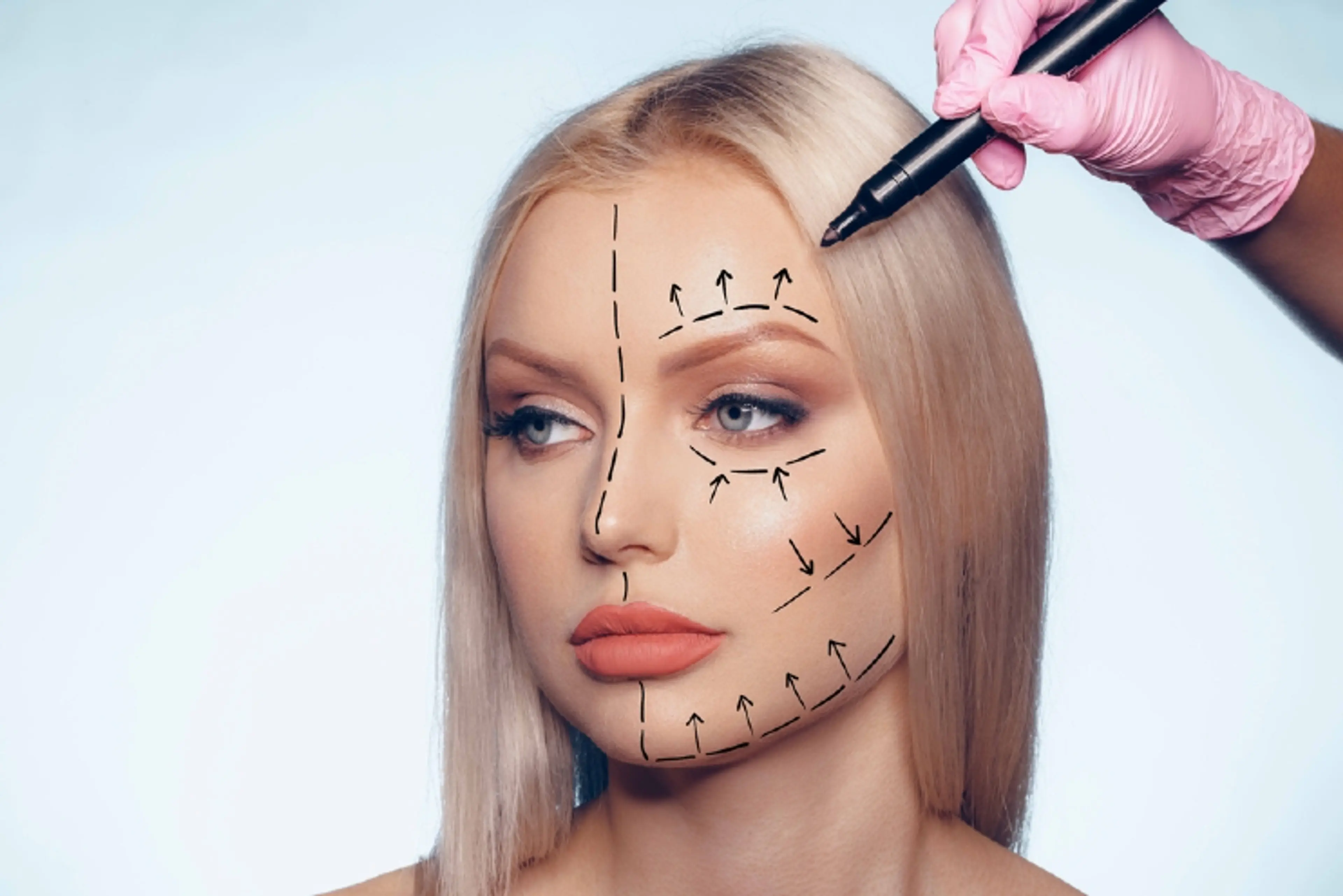
Unlike traditional methods that focus on the surface, this advanced technique goes beneath the muscle layer. By repositioning the deep tissues of the face, surgeons can create a look that is both dramatic in its youthfulness and subtle in its execution. The goal is simple: restoring your face to its natural position from a decade ago, without changing the fundamental features that make you who you are.
To understand this procedure, you must first understand the anatomy of the face. Your face is made of several layers. There is the skin, followed by a layer of fat, and then a fibrous muscle layer called the SMAS (Superficial Muscular Aponeurotic System). Beneath the SMAS are the deep tissues and "retaining ligaments" that act like anchors, holding your facial structure in place.
Feature | Traditional SMAS Facelift | Deep Plane Facelift |
|---|---|---|
Main Focus | Skin and top muscle layer | Deep ligaments and muscle units |
Mid-Face Lift | Limited improvement in cheeks | Excellent lifting of the cheeks |
Skin Tension | High (can look "pulled") | Low (looks natural) |
Longevity | 5 to 7 years | 10 to 15+ years |
Scarring | More visible due to skin tension | Nearly invisible due to low tension |
Not every face ages in the same way, which is why there are different variations of the deep plane technique to address specific concerns.
This is the most comprehensive version. It addresses the mid-face (cheeks), the jawline (jowls), and the neck. It is ideal for patients who want a total facial refresh.
Some patients have a youthful upper face but struggle with a "turkey neck" or heavy muscle banding under the chin. This procedure works beneath the platysma muscle to sculpt a sharp, clean jawline that traditional neck lifts cannot achieve.
This focuses specifically on the "nasolabial folds" or the deep lines that run from the nose to the mouth. By lifting the malar (cheek) fat pad back onto the cheekbone, it restores volume naturally without needing fillers.
For patients with significant skin laxity or heavier facial tissues, the extended version involves a wider release of ligaments. This provides the most dramatic vertical lift possible.
You have deep marionette lines and jowls that break the line of your jaw.
Your cheeks appear "hollow" or have descended toward your mouth.
You have significant "banding" or loose skin in the neck area.
While patients in their 50s, 60s, and 70s are the most common candidates, there is a rising trend of patients in their 40s seeking "preventative" deep plane lifts to maintain their structure before significant sagging occurs. To be a good candidate, you should be a non-smoker in good overall health.
The medical infrastructure in South Korea is among the most advanced in the world. Korean surgeons are famous for their extreme precision and "micro-details." Because the culture places a high value on natural beauty and facial harmony, South Korean clinics have perfected the art of the deep plane technique. Furthermore, South Korea offers a level of hospitality and post-operative care—including specialized deswelling treatments—that is rarely matched in the West.
South Korea is widely considered the best destination for this treatment, offering the highest level of surgical expertise at the most competitive price point. In the United States or Europe, you are often paying for the high overhead of the clinic, whereas in South Korea, the efficiency and volume of the medical tourism industry allow for world-class care at a fraction of the cost.
Country | Average Price Range (USD) | Level of Care / Expertise |
|---|---|---|
South Korea | $8,000 – $15,000 | Global Best (Highly Specialized) |
United Kingdom | $15,000 – $30,000 | High |
Australia | $18,000 – $35,000 | High |
United States | $20,000 – $50,000 | High (Varies by City) |
Recovery is a journey of patience. While the deep plane technique actually results in less "surface" trauma than some older methods, it still requires time for the deep tissues to heal.
How many deep plane procedures do you perform every week?
Do you fully release the retaining ligaments, or do you just tighten the muscle?
Can I see "before and after" photos of patients with a similar bone structure to mine?
What specific post-operative care do you provide to help with swelling?
Because it reshapes the underlying structure rather than just stretching the skin, results typically last 12 to 15 years. This is significantly longer than traditional methods.
No. The Deep Plane technique is designed to put your features back where they were years ago. You will look like a refreshed, younger version of yourself.
Most patients report "tightness" and "discomfort" rather than sharp pain. Because the skin isn't being pulled tight, there is often less surface-level pain than traditional lifts.
South Korea offers the perfect combination of the world's most experienced facial surgeons and the most competitive pricing. Their clinics utilize advanced imaging and post-op care that are often unavailable elsewhere.
Incisions are hidden in the natural creases of the ear and along the hairline. Because the deep tissue bears the weight of the lift, the skin heals without tension, making scars nearly invisible once matured.
Most patients feel comfortable returning to work and social activities after 10 to 14 days, though some minor swelling may persist.
While the cost and expertise vary globally, the South Korean medical market stands out as the premier destination for those seeking the best possible outcome at the most affordable price. Whether you are just starting to see the signs of aging or are ready for a significant change, the deep plane approach offers a path to a more confident, youthful you.